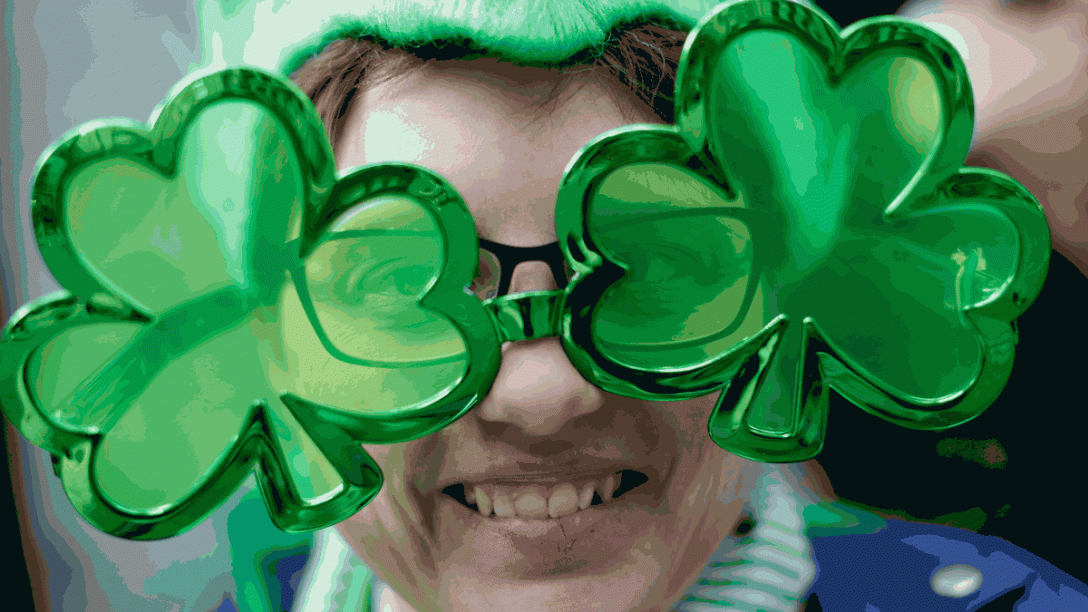
If you’re wondering why you’re wearing green right now, there’s more to it than protection from pinching fingers. It goes back to the Irish Rebellion, when Irish soldiers wore green as they fought off the British in their trademark red. Until then, the color associated with St. Patrick and Feast Day was actually blue. The song soldiers sang during the war in 1798… The Wearing of the Green changed all of that and made green, the color of shamrocks, Ireland’s mainstay color. From then on, people wore green on St. Patrick’s Day in solidarity. And when Chicago dyed their river green for the first time in 1962, the practice of wearing and decorating in green became a part of pop culture. It’s now commonplace to bust out your best greens mid-March. Okay, so why all the drinking then? It’s part historical subtext; part us succumbing to advertising, and part stereotyping. Originally, St. Patrick’s Day, or Feast Day, saw the lifting of Lent restrictions for the day, giving Christians a breather as they made their way to Easter. Basically, it was a day to eat and drink as much as you please in celebration, hence the traditional Irish meal of bacon and cabbage. But chugging on whiskey and beer was not part of the equation. In fact, pubs in Ireland were forced by law to shut down for the holiday until later in the 20th century, and drinking alcohol on St. Patrick’s Day was greatly frowned upon until the late 1970’s.
Then, a huge marketing push from Budweiser in the 80’s convinced thirsty revelers that drinking beer and St. Patrick’s Day were one in the same. The rest is “drunken history” that nobody seems to remember. Many people now use the holiday as an excuse to have a drink, which fosters negative stereotypes by incorrectly associating the act of getting wasted with Irish culture. But, at least now you can take a swig of your Guinness in pride because you know the real story.
Have a great weekend.
 TERRY Talks